

Quick answer
A danube river cruise budapest to vienna typically takes between 4.5 and 6 hours for express daytime sailings, though multi-day itineraries stretch the journey to include stops in Bratislava, Esztergom, and the Wachau Valley. The Danube River itself is free to access; cruise operators charge varying ticket prices depending on vessel class, onboard amenities, and route inclusions. Morning departures between 08:00 and 10:00 offer the best natural light for photography and avoid afternoon weather shifts common along the river valley.
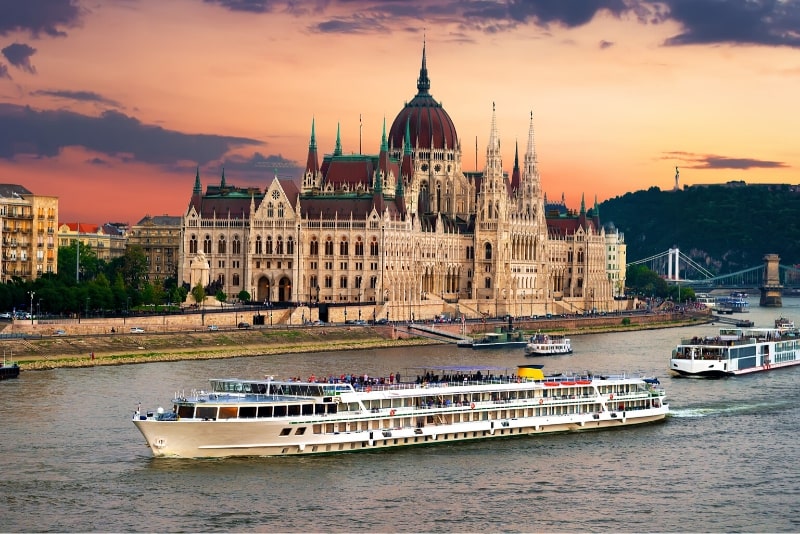
The Danube River between Budapest and Vienna remains the only navigable waterway connecting two European capital cities without a single lock, a geographic anomaly that made the corridor a trade artery for two millennia before it became a leisure route. Most contemporary cruise operators depart from Budapest's Vigadó Square or Batthyány Square landings, threading beneath the Chain Bridge and past the Parliament dome before entering the open valley downstream. The river's flow dictates the journey's rhythm. Eastbound sailings from Vienna to Budapest ride the current and finish faster; westbound cruises work upstream and add roughly 45 minutes to the published schedule. Between the capitals lies a succession of named bends—the Danube Knee at Visegrád, the narrow strait below Esztergom's basilica, the vineyard-terraced Wachau Valley approaching Melk—each a natural chokepoint that slowed medieval commerce and now frames the sightseeing sequence aboard modern vessels. Operators range from hydrofoil express services completing the run in under five hours to river hotel ships that anchor overnight in Dürnstein or Krems, turning a single-day transit into a three- or four-night itinerary. The express sailings suit travelers threading the danube river cruise budapest to vienna into a tighter central Europe loop; the longer cruises appeal to those prioritizing the valley's abbey complexes, wine estates, and fortress ruins over rapid city-to-city transfer. Neither format requires advance booking outside July and August, when both daytime express slots and multi-day cabin inventory tighten. The riverbanks shift character at the Slovak border. Upstream from Bratislava the valley widens and the current slows; villages give way to agricultural floodplain, and the frequency of passing commercial barge traffic increases. Downstream from Bratislava the river tightens again, hemmed by forested slopes on the Austrian approach to the Wachau. Weather patterns follow the topography: morning fog lingers in the narrows below Esztergom through early autumn, while the open stretches near Győr remain clear. Cruise vessels operating this corridor range from Soviet-era hydrofoils still in service on budget express routes to purpose-built river hotel ships carrying fewer than 200 passengers. The vessel type matters more than the operator when it comes to onboard experience—older express boats offer airline-style seating and limited deck access, while newer ships dedicate two-thirds of their passenger decks to open-air promenades and panoramic lounges.
“The Danube between Budapest and Vienna remains the only navigable waterway connecting two European capital cities without a single lock.”
Best Time for a Danube River Cruise Budapest to Vienna
The best arrival window for your cruise is 08:00–10:00, as morning departures provide optimal lighting for sightseeing while minimizing exposure to late-day weather shifts. Planning your travel around shoulder seasons balances comfortable temperatures with manageable passenger volumes.
May to June
Moderate crowdsMild, 15°C to 24°C
Spring offers blooming landscapes and temperate conditions ideal for river travel.
September to October
Moderate crowdsCooler, 10°C to 20°C
Early autumn provides clear visibility and lower humidity levels for outdoor viewing.
July to August
High crowdsWarm, 20°C to 30°C
Summer maintains peak travel volume with consistent daylight hours for the journey.
Weekday mornings
Low crowds—
Departing early improves transit flow and provides the best conditions for deck-level photography.
Verdict: The most favorable period is weekday mornings during May or September for a balance of clear weather and moderate passenger flow.
Planning Your Itinerary: Danube River Cruise Budapest to Vienna
Most Budapest to Vienna cruises span 4–5 hours of sailing time, though full-day itineraries often include 6–8 hours when accounting for embarkation, meals, and optional shore stops. This timeline suits travelers ready to spend a full day on the water.
Embarkation in Budapest
Board at one of the central Danube piers—Vigadó tér or Batthyány tér are common departure points. Arrive 30 minutes early to clear check-in and secure preferred seating.
Departure and Budapest Panorama
The vessel exits Budapest, passing the Parliament Building, Buda Castle, and Chain Bridge on both banks. Most operators serve breakfast or morning coffee during this segment.
Danube Bend Navigation
The river curves through the Danube Bend, a forested valley where castle ruins dot the hillsides. Some cruises pause briefly at Visegrád or Esztergom for a photo stop or optional 20–30 minute walk.
Onboard Lunch Service
Lunch is typically served as the cruise continues through the Slovakian border stretch. Expect a seated meal or buffet, depending on the operator.
Approach to Vienna Outskirts
The landscape flattens as you near Austria, with vineyards replacing forested slopes. Commentary often covers the region's wine-growing heritage and Habsburg history.
Arrival in Vienna
Disembarkation at Reichsbrücke or Schwedenplatz piers in central Vienna. Factor in 15–20 minutes to collect belongings and exit the vessel.
Getting There: Navigation for Your Danube River Cruise Budapest to Vienna
The Danube River cruise boarding points in Budapest are centrally located along the riverbanks between the Margaret Bridge and the Liberty Bridge. Travelers can reach these embarkation docks easily via the city's extensive public transit network.
M2 line to Batthyány tér station
Line 2 to Kossuth Lajos tér or Széchenyi István tér
Direct service to your specific cruise dock
Pricing and Costs for a Danube River Cruise Budapest to Vienna
Access to the Danube River itself is free of charge. Actual cruise ticket prices for the route between Budapest and Vienna are determined independently by private river cruise operators based on service level and vessel type.
Individual travelers pay varying rates depending on the selected cruise operator, cabin class, and time of booking.
Daily Availability for a Danube River Cruise Budapest to Vienna
The Danube River is accessible for cruise navigation throughout the week. Operational schedules for departures are consistent across all days to facilitate flexible planning.
| Monday | 00:00–23:59 | |
|---|---|---|
| Tuesday | 00:00–23:59 | |
| Wednesday | 00:00–23:59 | |
| Thursday | 00:00–23:59 | |
| Friday | 00:00–23:59 | |
| Saturday | 00:00–23:59 | |
| Sunday | 00:00–23:59 |
Preparation Checklist for Your Danube River Cruise Budapest to Vienna
Cross-border river travel between Hungary and Austria requires valid documentation and advance booking with your chosen operator.
-
Check passport validity and EU entry rules — Non-EU nationals need passports valid for the duration of travel; EU citizens may use national ID cards
-
Book your cruise cabin or ticket online — Popular routes sell out weeks ahead, especially May through September
-
Confirm embarkation point and boarding time — Budapest departures typically leave from the international dock near the Chain Bridge
-
Pack layers and waterproof outerwear — River temperatures drop in the evening and weather shifts quickly on open water
-
Download offline maps for Vienna arrival — Mobile data may be limited during the journey and at docking points
-
Arrange onward transport from Vienna dock — The arrival point at Reichsbrücke requires a taxi or public transit connection to the city center
Check availability
Frequently asked questions about danube river cruise budapest to vienna
Everything you need to know about danube river cruise budapest to vienna